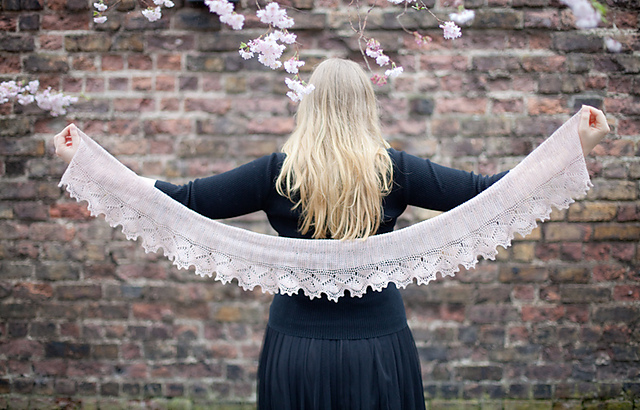
An extraordinary journey with fellow crafters has come to an end. We traveled the Tunisian highway and reached one milestone by creating the beautiful Pax shawlette. This is in no way the end but a stepping stone to all things tunisian.
The doubts that were cast were cleared with the help of video tutorials and a Facebook Live session. Not to mention, members stepping up and helping each other!! That’s the best part of being in a community that understands and goes the extra mile to share, to learn and to connect.
We would love to give a special mention to one of the most involved member from our community , Jayam Jammu ! Let’s give the loudest cheer for this awesome crafter who kept all of us on our toes and culminated her journey with a superb walk to show off her Shawlette. Take a bow Jayam!
We would also like to take this moment to give a shout out to Arunima , who is a versatile Indian designer creating beautiful Tunisian crochet designs. You can find her on Facebook and Instagram under the username Knitterknotter.
We hope that by giving you a glimpse of the Tunisian crochet technique , we have sparked a little something in you and may you go on to creating stunning Tunisian crochet projects!
Check out the participants video here:
Thanks once again for walking the road with Tunisian crochet!
Hoping to see you all in our next crafty journey!
Leave a comment below to let us know what you think!
We have successfully completed the two charts of pax shawlette and are at the very end of the pattern. Many have already completed the whole shawlette and we are very happy to see their finished objects.
The following is the explanation of the last two rows in simple English.
After completing chart B, you should have finished with one row of single crochet. You should have 451 sc.
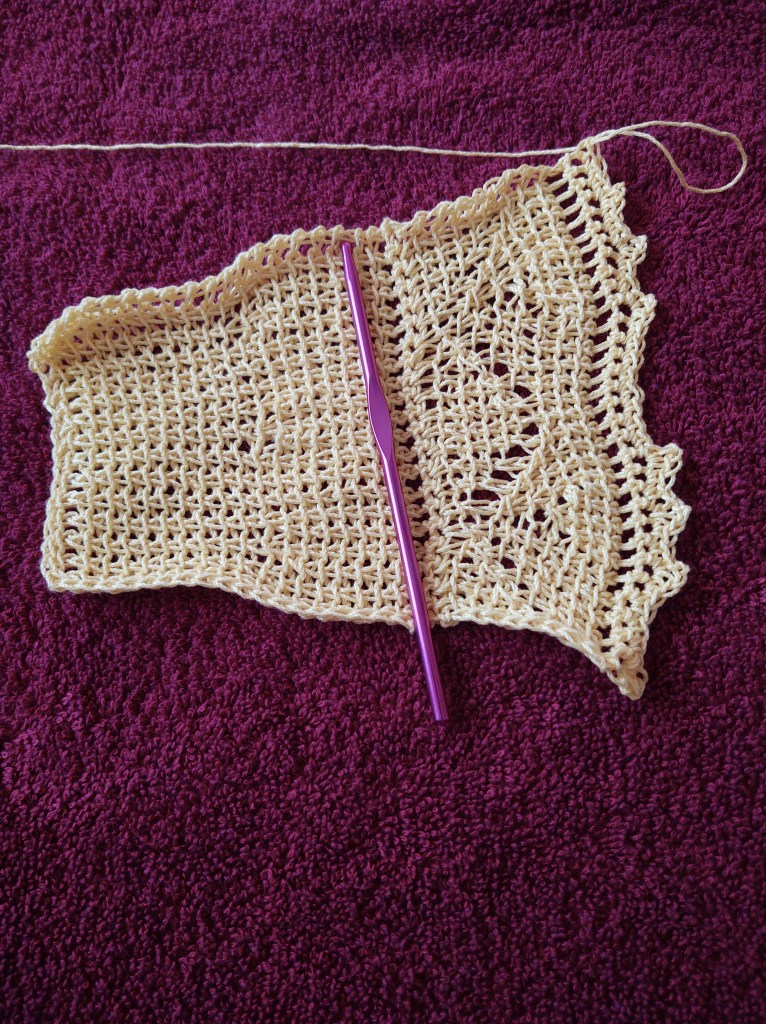
Picot edging
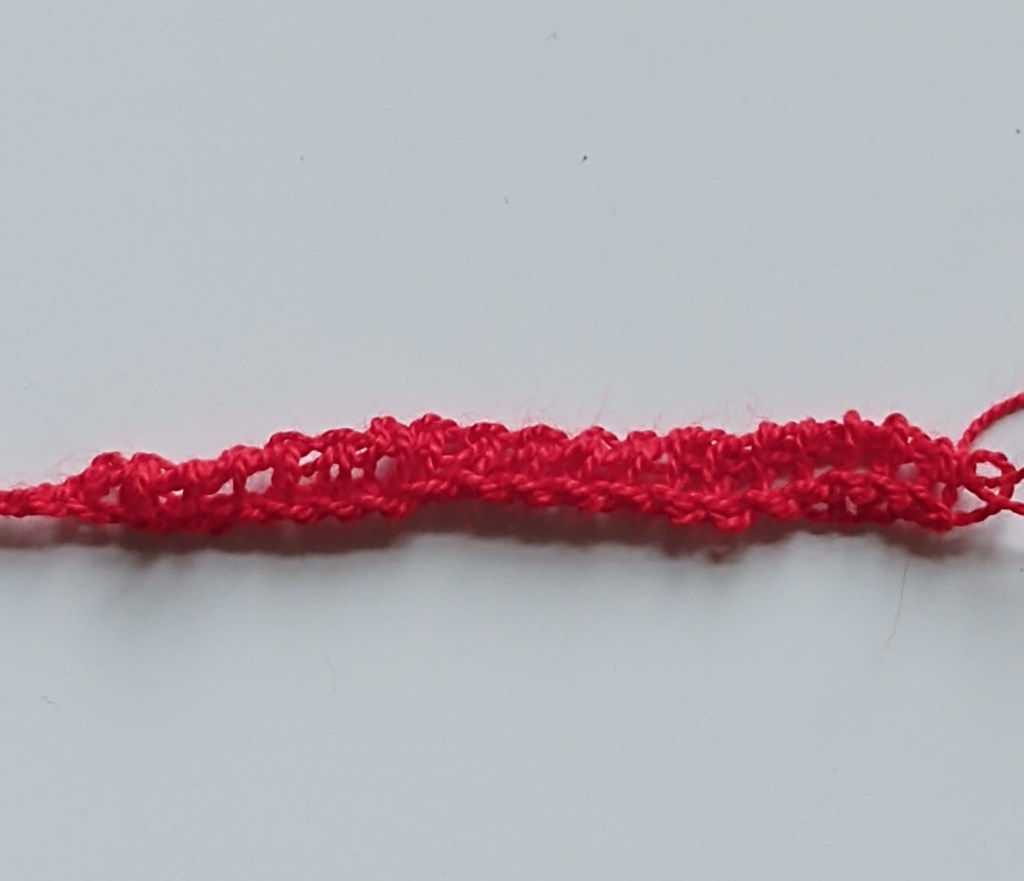
Here the designer has designed the picot as (sc, ch2, sc) to be worked in the specified stitch.
Ch1, picot in the first stitch ( that is you make sc, ch2, sc in the same stitch), 1 single crochet in each of the next 4 stitches, picot, 1 sc in one each of next 2 sts, picot, 1 sc in one each of next 2 sts, picot, [1 sc in each of the next 8 stitches, picot, 1 sc in one each of next 2 sts, picot, 1 sc in one each of next 2 sts, picot]
Repeat the instructions in the square bracket till you reach the last 4 stitches. 1 sc on each of the next 3 stitches, picot in the last stitch. Fasten off. Weave in the ends.
You can watch the video here for better understanding:
Ta da ! You are done! Give yourself a pat of the back for a job well done!
The next step is blocking.
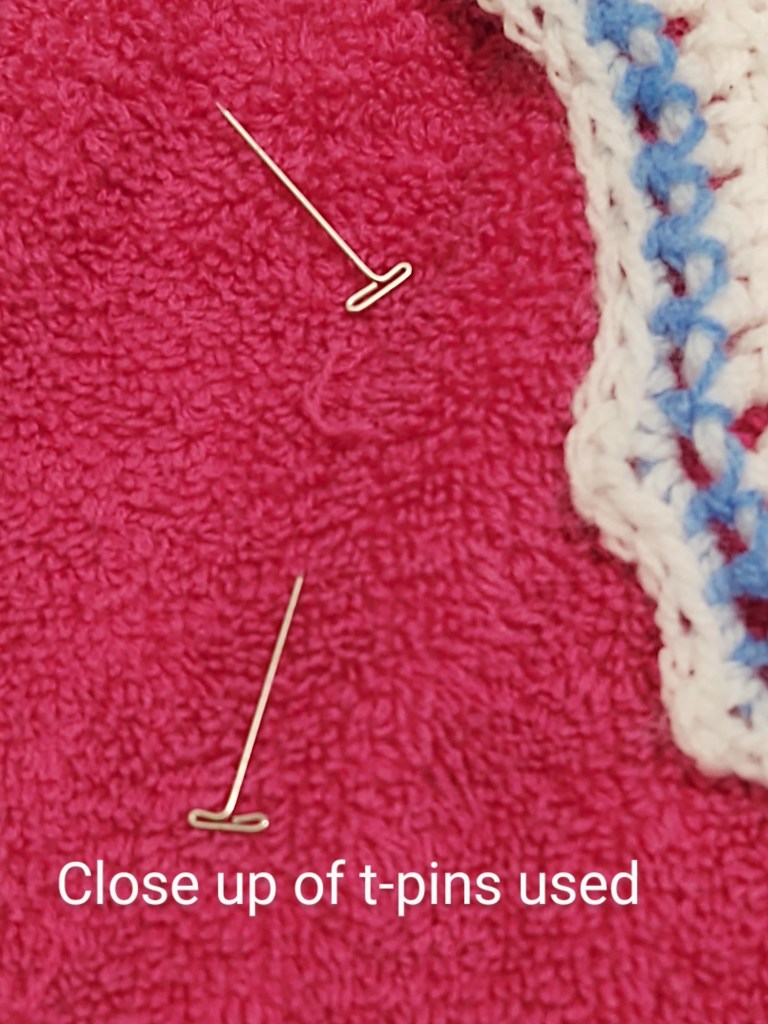
For this step you will need , a sink or tub to hold, cold water, mild soap, towels, t pins, foam boards, steam iron or hair dryer
Blocking refers to the process of washing and pinning the finished product to the desired dimensions. The blocking technique varies for the type of material used.
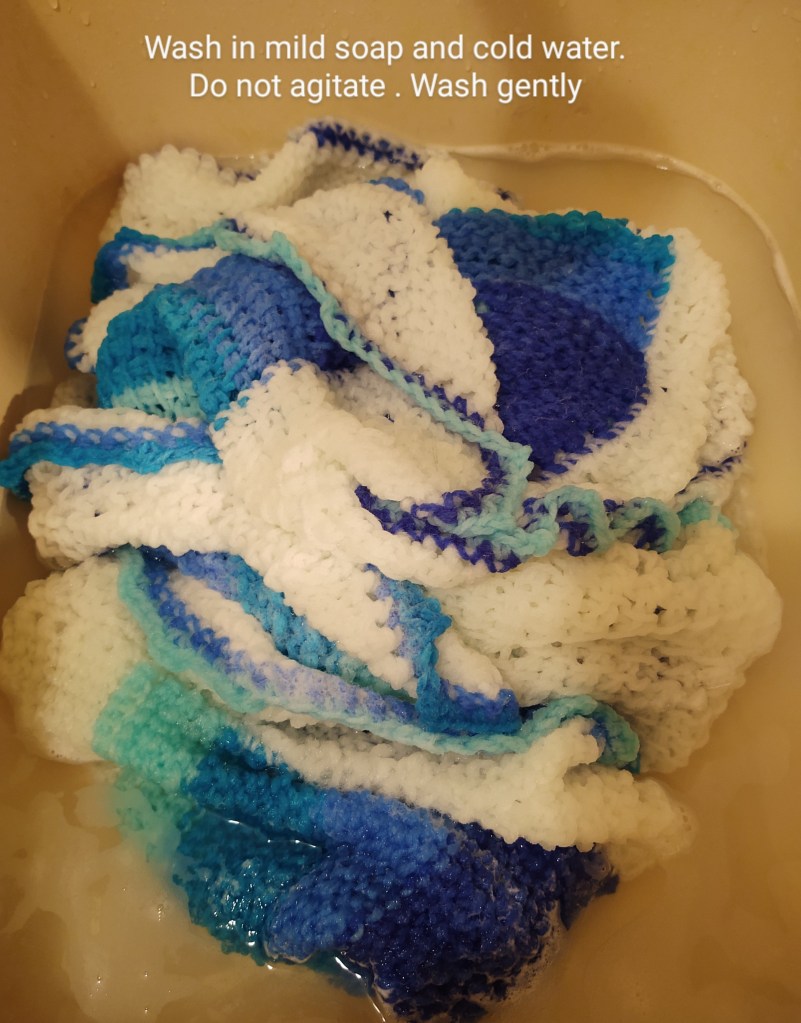
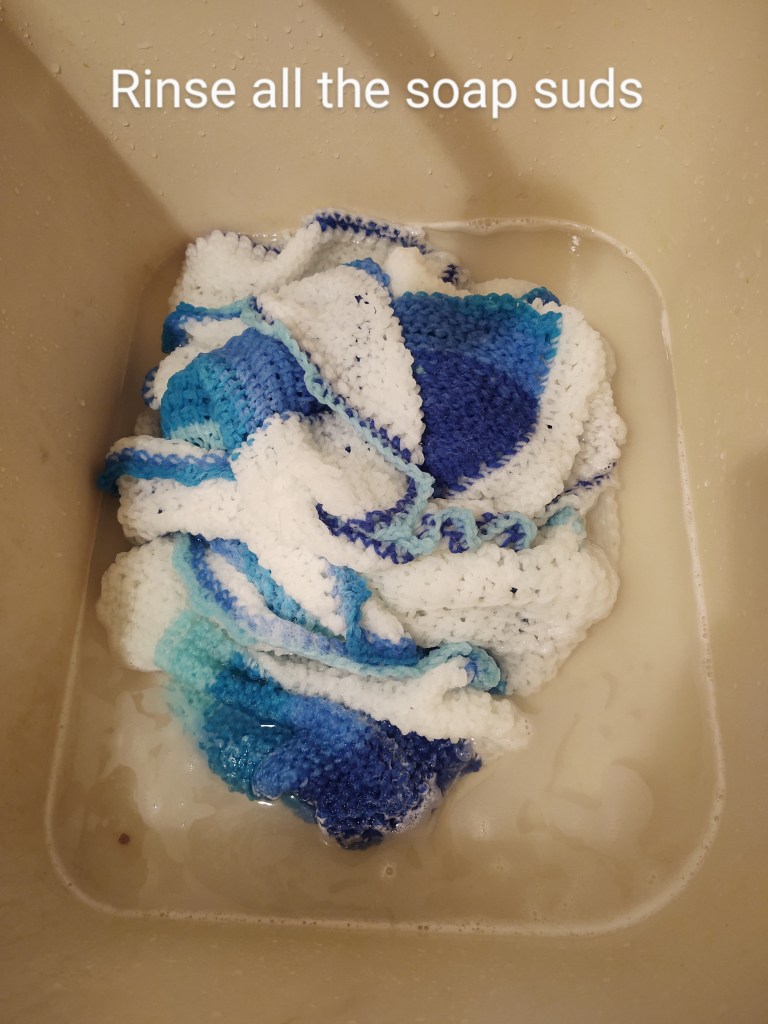
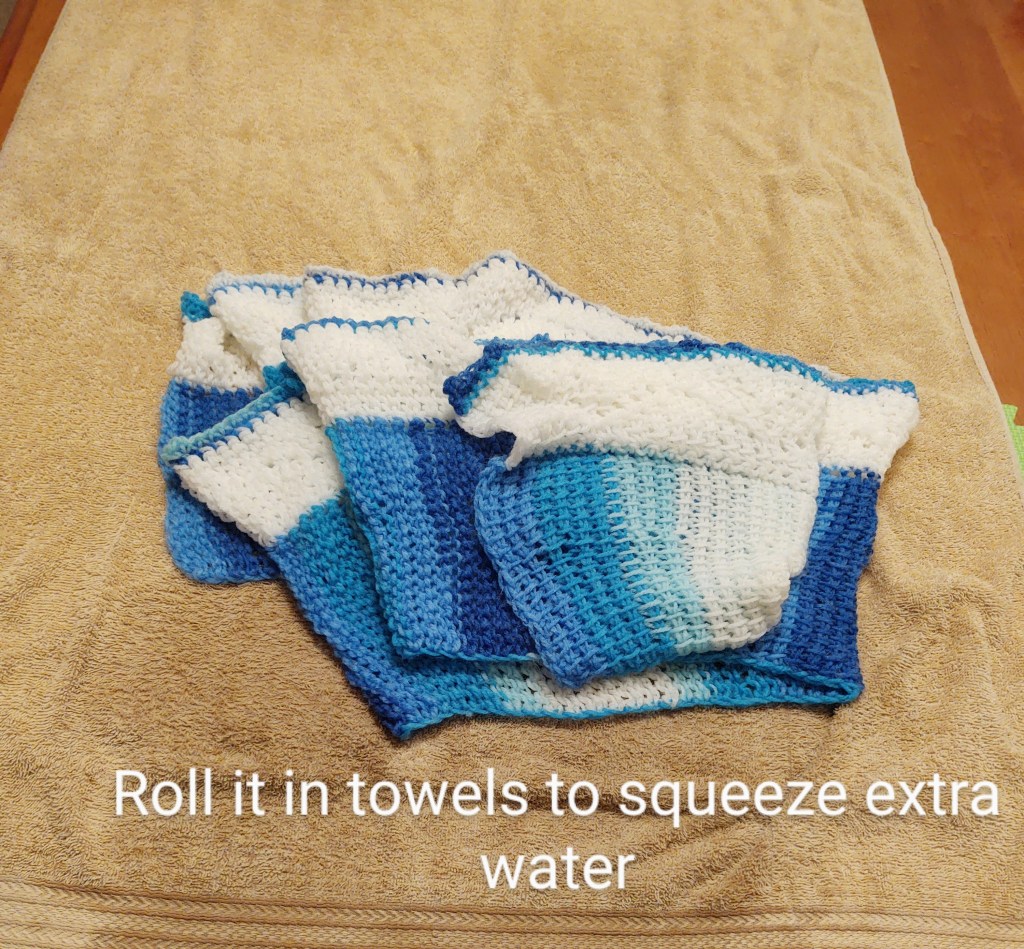
For acrylic you will gently wash the handcrafted piece in cold water and mild detergent. A few drops of the handwash soap or mild shampoo will do the trick. Rinse in water till the soap suds are removed. Do not wring( twist) the project to remove excess water. Squeeze out as much water as you can.
The project will become heavy with all the water it has absorbed.
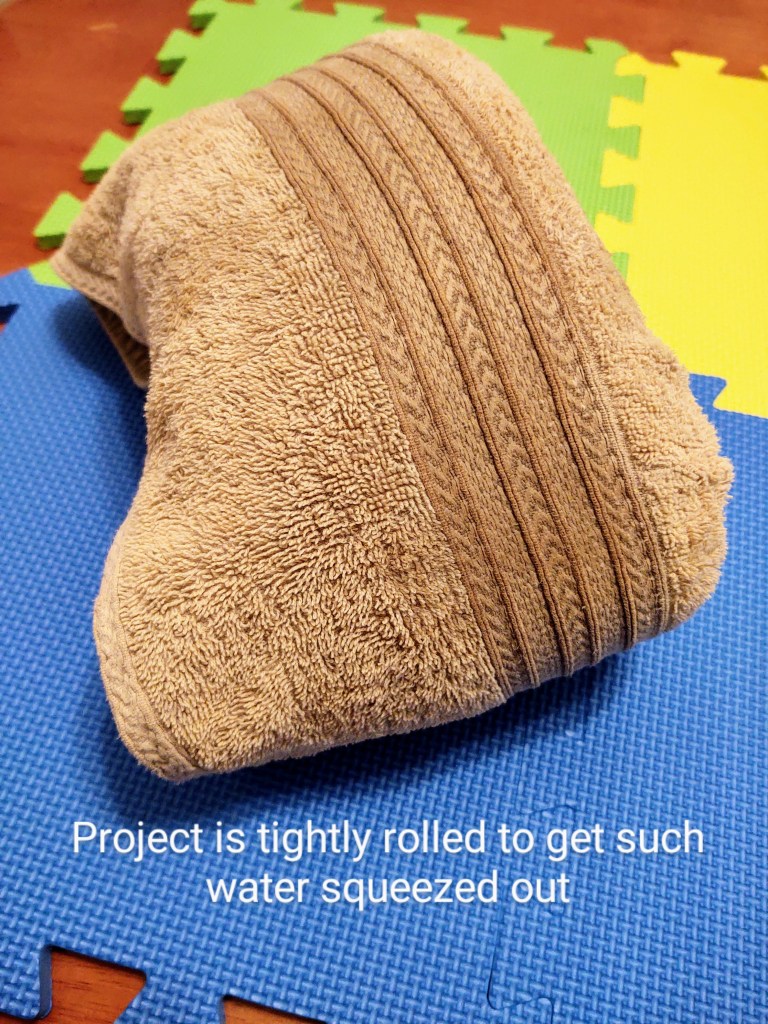
Now roll the piece in a thick towel. Use two towels if there is a lot of water to be removed.
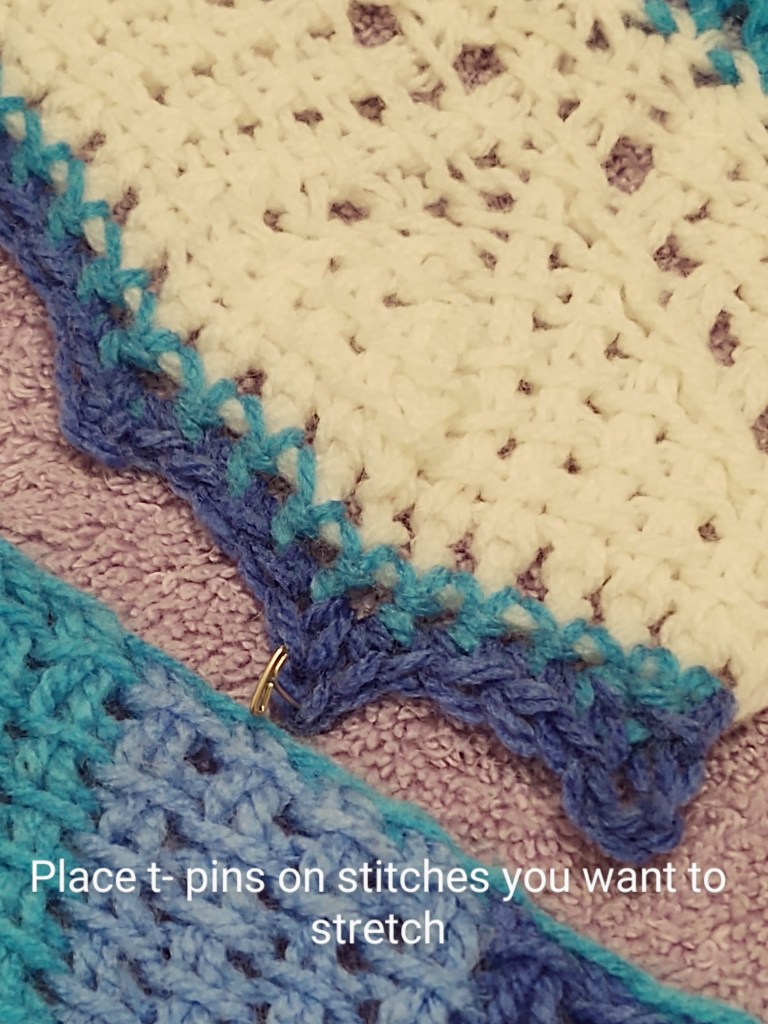
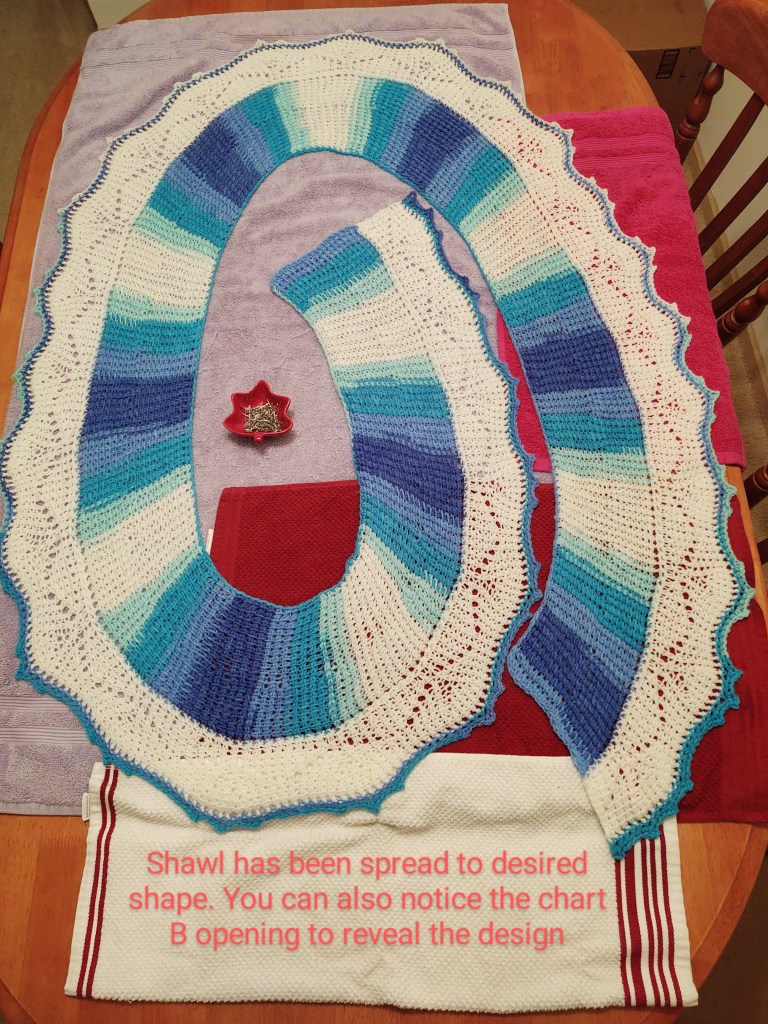
Arrange foam sheets ( or if you have a spare bed you can use that) and cover it with two to three layers of towel. Spread your finished project out and carefully shape the project with your hands to the desired shape.
You will now take your t-pins and pin the points you want to be stretched. Usually one places the t-pins on the picots .
After you have adjusted the project to the shape you desire, you can leave it to air dry.
Once again if the material is acrylic, you can use steam to kill the fibres. This means that once the lace stitches open up you do not have to keep blocking everytime you wash.
Plug in the steam iron and use the steam to block acrylic. You should not place the iron box on the crochet piece. You should hover the iron box over the project a few inches at a time. Slowly move the iron box so that the entire shawl is blocked.
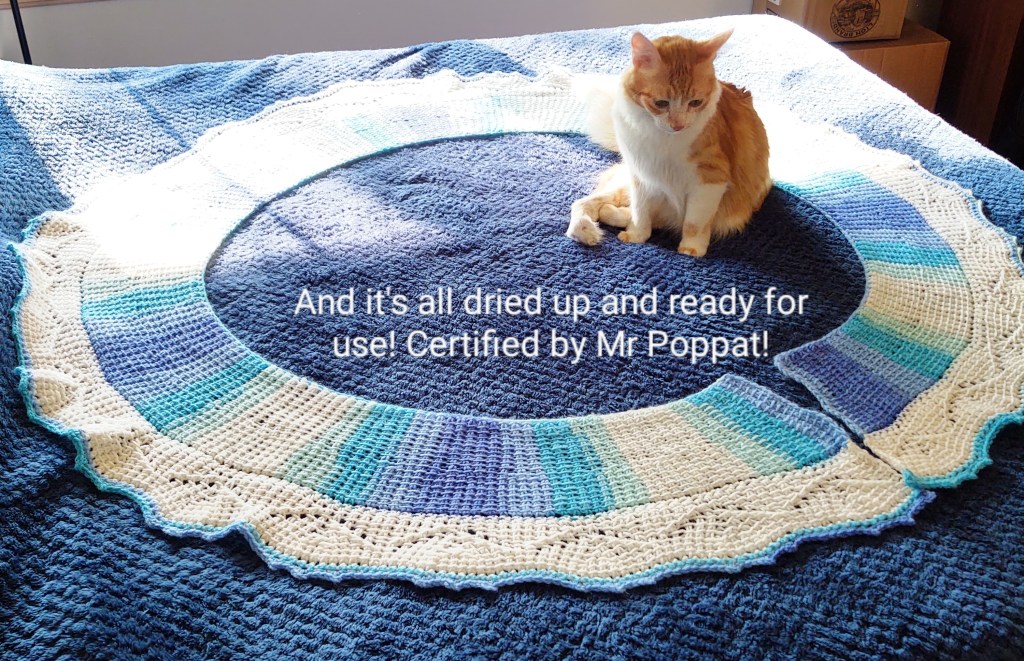
Leave it to air dry and once it’s done, remove the pins and take pictures, model it if it’s a wearable and show it off. Sit back and wait for compliments to flow your way!!
If you have used cotton , same principle but you can use starch to make your fo to have a crisp look.
For silk do not wash in water. Instead use a spray bottle and spray water to moisten the crochet / knit piece.
Then pin and let dry.
For wool if it says superwash then you can wash it and follow the same principle as acrylic. For non superwash wool , care must be taken to not agitate the fo as it will cause the wool fibres to fuse and felt.
Then pin and let dry.
You can check out the video below to understand blocking better:
Hello Everyone! The Pax Shawl TCAL is under way and we have seen some good progress!
However, we had a lot of queries with regards to the chart A and how to begin. So here we are as promised to help you guys out with the detailed instructions for the chart A with a photo turorial and a video tutorial!
We got permission from the Designer of the PAX Shawl @Aoibheni to provide a step by step video tutorial for the TCAL!!!
New here and Still wondering what is the all this??
You can check all the details about the Pax shawl TCAL, HERE.
Lets begin!
Follow the instructions for PAX SHAWL:
You will chain 235,
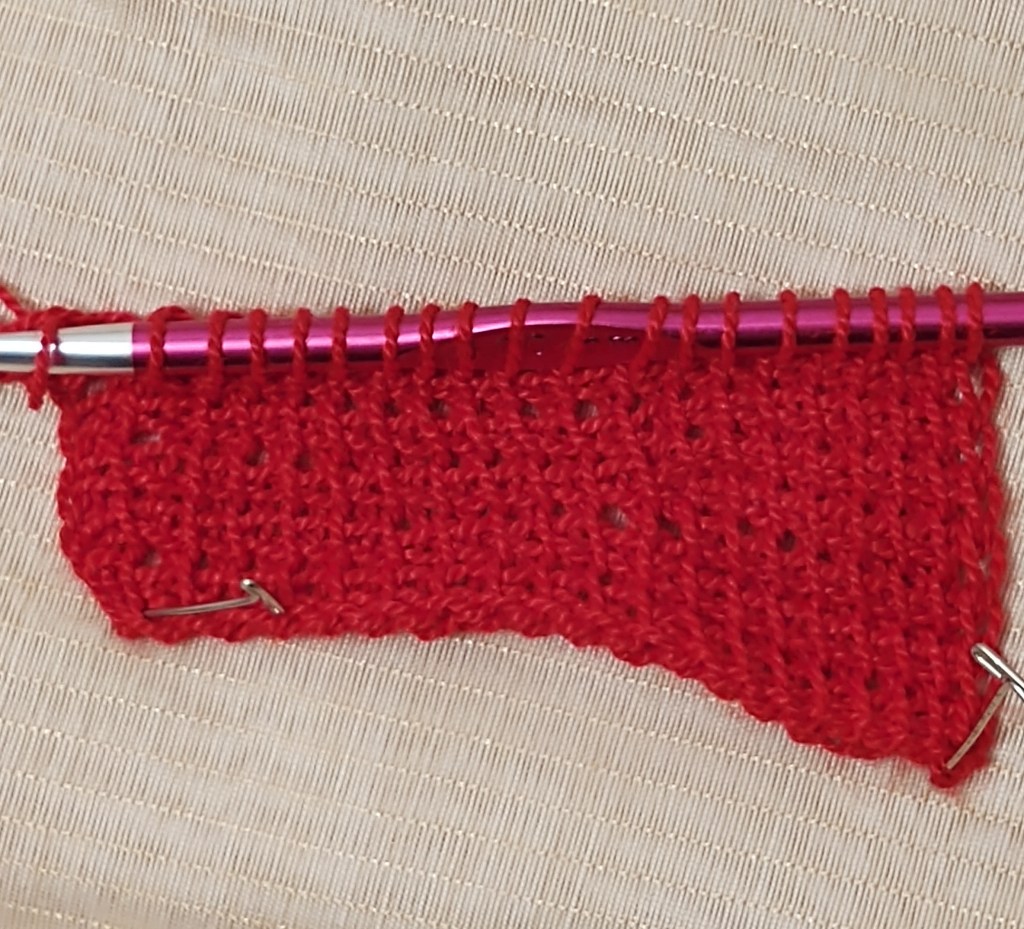
Insert hook in second chain from hook in the back bump, yarn over pull up a loop, (insert hook in next chain yarn over, pull up a loop) repeat the instructions in the ( ) till you have 19 loops on the hook, including the first loop.
Source: IYC
Repeat () once more by inserting into the 21st chain for a total of 20 loops. Now you yarn over , pull through 2 loops, repeat this until you have one loop on hook. This is one row
Source: IYC
Repeat this again but now you will be inserting into the 2nd vertical bar and continue all the way down until you have 19 loops. 20th loop will be picked up from the base chain. Repeat the return pass
Source: IYC
Next is short row. Pick up and work only 9 loops ( including the one on the hook) , work return pass.
Source: IYC
Source: IYC
Next row pick up 19 loops total and for 20th loop go into the next base chain
Source: IYC
Repeat return pass
Repeat short row
Source: IYC
Repeat full row twice
Source: IYC
This is one repeat
Now again start working on other vertical bars.
This sequence will be like this
[ 2 full rows
1 short row
1 full row
1 short row
2 full rows]…. repeat
Only the full rows connect to base chain. Count the number of rows on the right side . You should have seven for each repeat.
Continue all the way till you reach the end of the base chain
This is chart A…
You can watch the video tutorial for further understanding.
Please feel free to leave your queries and comments below!
All images are copyright of IndiaYarnCircle and the respective makers, unless otherwise mentioned. You can read our disclaimer policy here.
Now that we have seen what tunisian crochet is and how to work it, lets go a step further!!
As you all know, we are running the PAX Shawl as TCAL over at the IndiaYarnCircle for this month, and we thought it would be a great help to break down certian stitches and techniques, and ease your understanding of Tunisian Crochet.
The Pax shawl is beautiful simple tunisian crochet pattern that uses a combination of regualr crochet and tunisian crochet techniques.
Source: @aiohobeni
One of the stitches used in the shawl is the Tunisian Linked stitch or the Uple stitch.
The linked stiches can be worked in any numbers as required. These are very simple stitches that are a perfect combination of regular crochet and tunisian crochet.
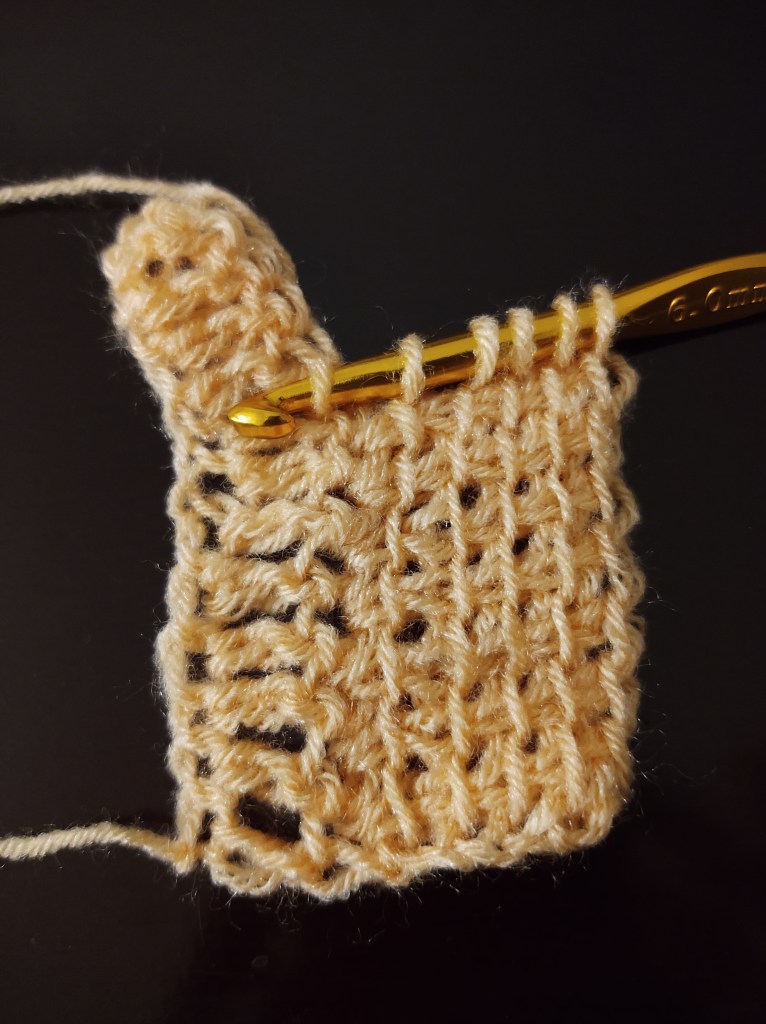
The linked stitch is basically a vertical stitch worked up to the length n number required and worked down again to link it to the foundation row.
You can build the linked sttiches to make them 1-uple, 2-uple, 3-uple, 4-uple, 5-uple and so on. These numbers are basically the no. of horizontal bars in the one stitch.
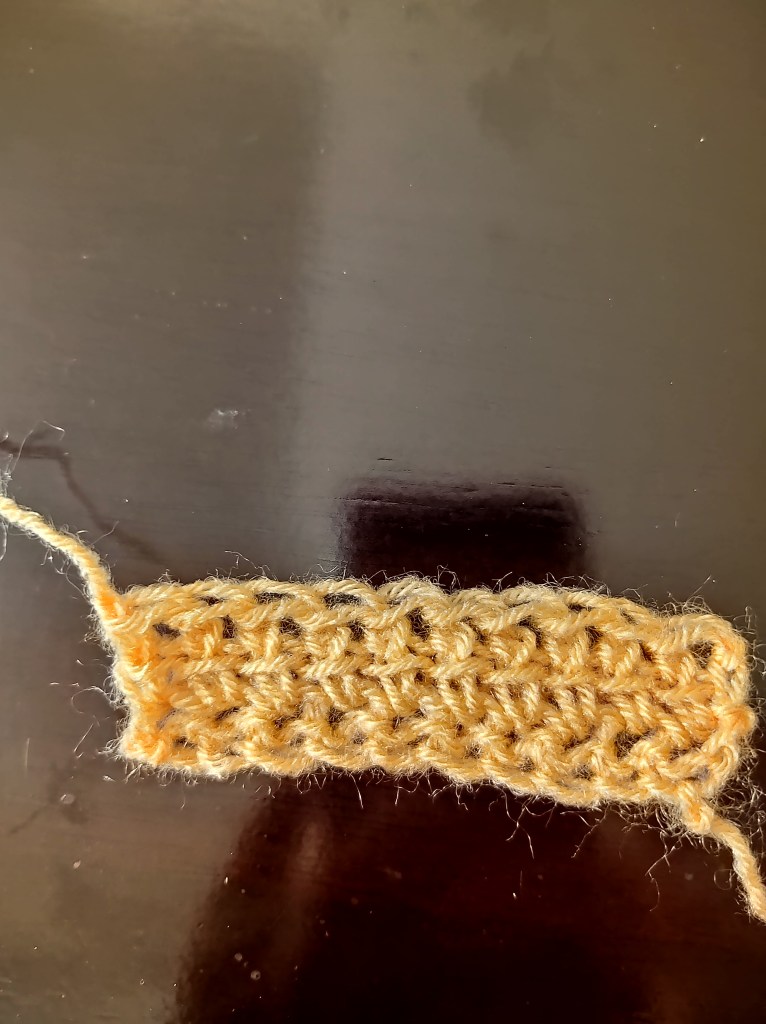
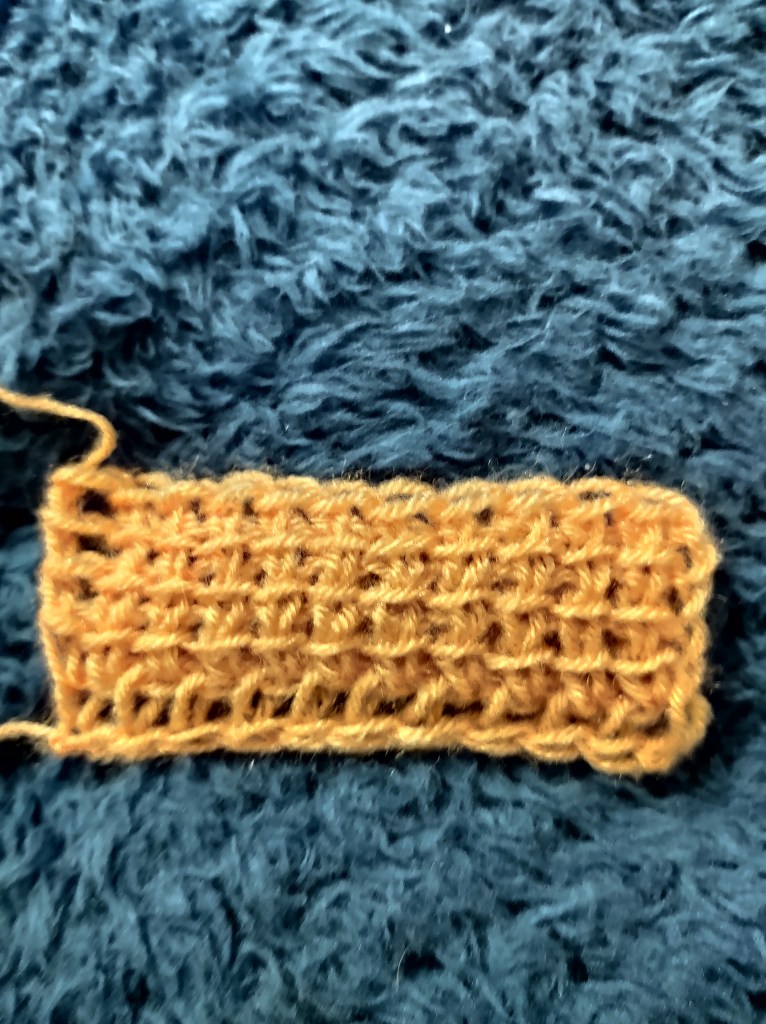
1-uple stitch with one horizontal bar3-uple stitch with 3 horizontal bars
2-uple stitch with two horizontal bars4-uple stitch with 4 horizontal bars
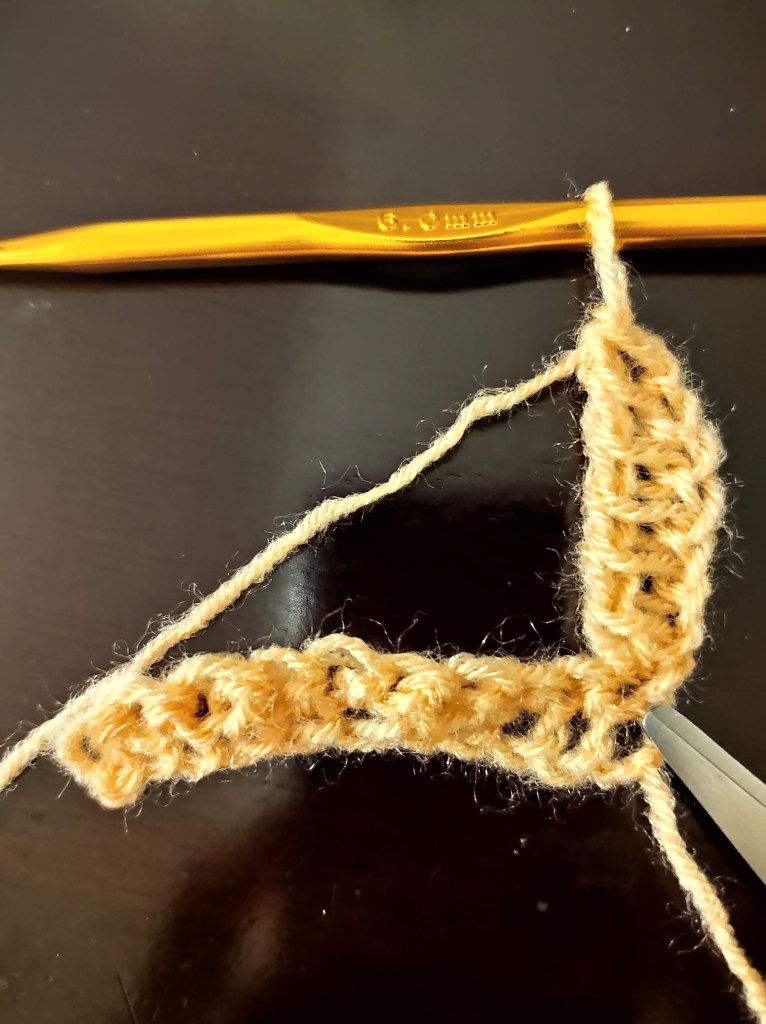
The working of the linked stitches is a little different, since we pull up loops in the horizontal bars and work verticaly to build the height of the stitches. Hence it better to turn work 90 degrees to make it easier.
Image showing the vertical length of the 5-uple stitch
Image with work turned 90 degree for working the horizontal bars
You can find a detailed video tutorial explaining the linked stitches below:
Hope this tutorial is helpful for understanding the tunisian linked stitches!!
Please feel free to leave your queries and comments below!
All images are copyright of IndiaYarnCircle and the respective makers, unless otherwise mentioned. You can read our disclaimer policy here.
What is Tunisian Crochet? Is it knitting? Is it crochet? Is it related to Tunisia? Well a little bit of the first two and there is no evidence of the connection with Tunisia. It used to be referred to as Shepherd’s knitting, Fool’s crochet or Idiot’s stitch. However, there is no evidence on why these three references came up.
So, what is Tunisian crochet? It’s a form of crochet where one starts like any other regular crochet work, with a starting chain. The next step resembles knitting where one picks up loops and places them on the hook. The similarity to knitting ends here😊. The final step to complete the stitch is to yarn over and pull through two loops at a time till you reach the start. There you have it, in a nutshell, Tunisian crochet.
It is always worked on the right side and yes there are techniques to work it in the round. More on that later.
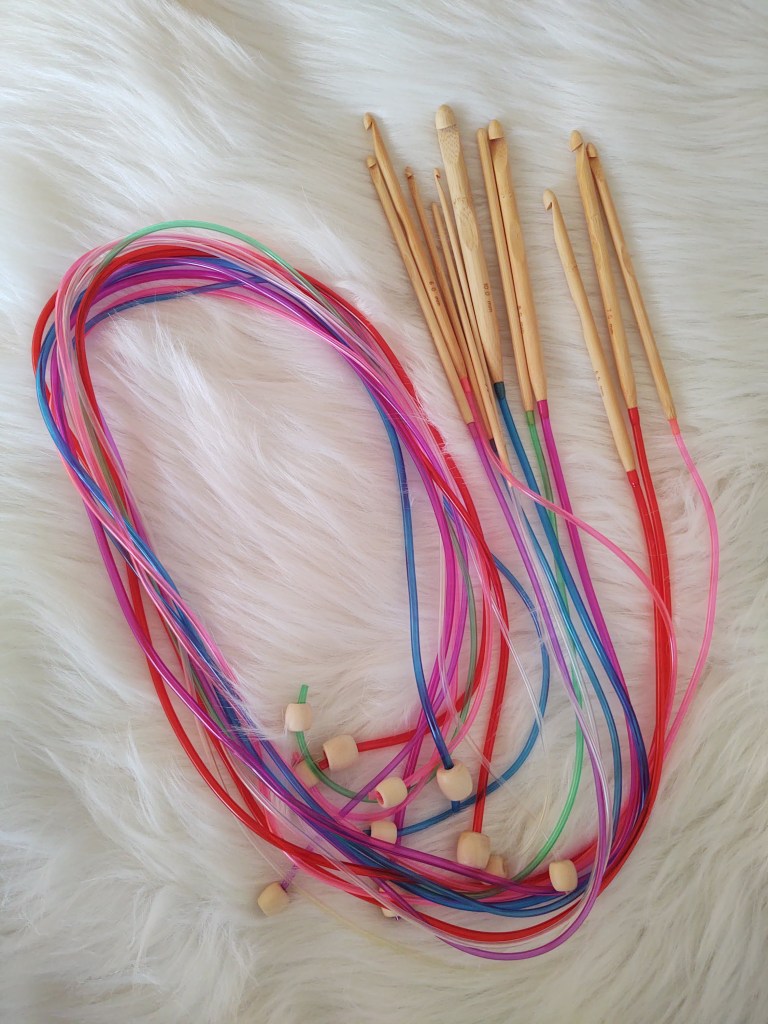
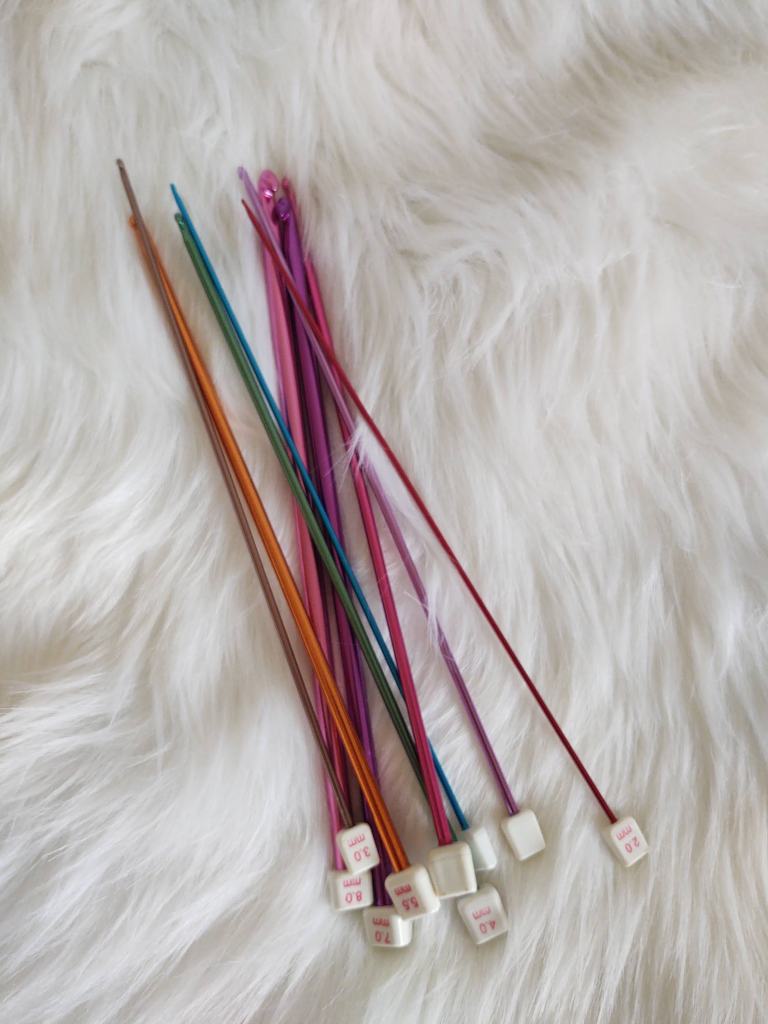
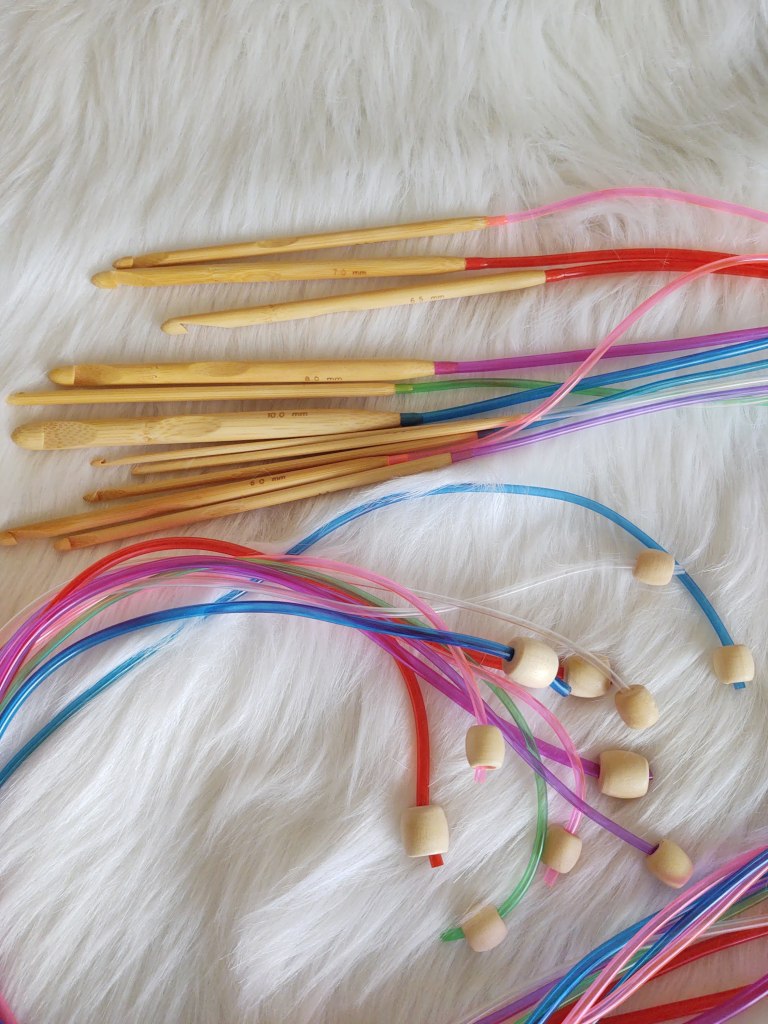
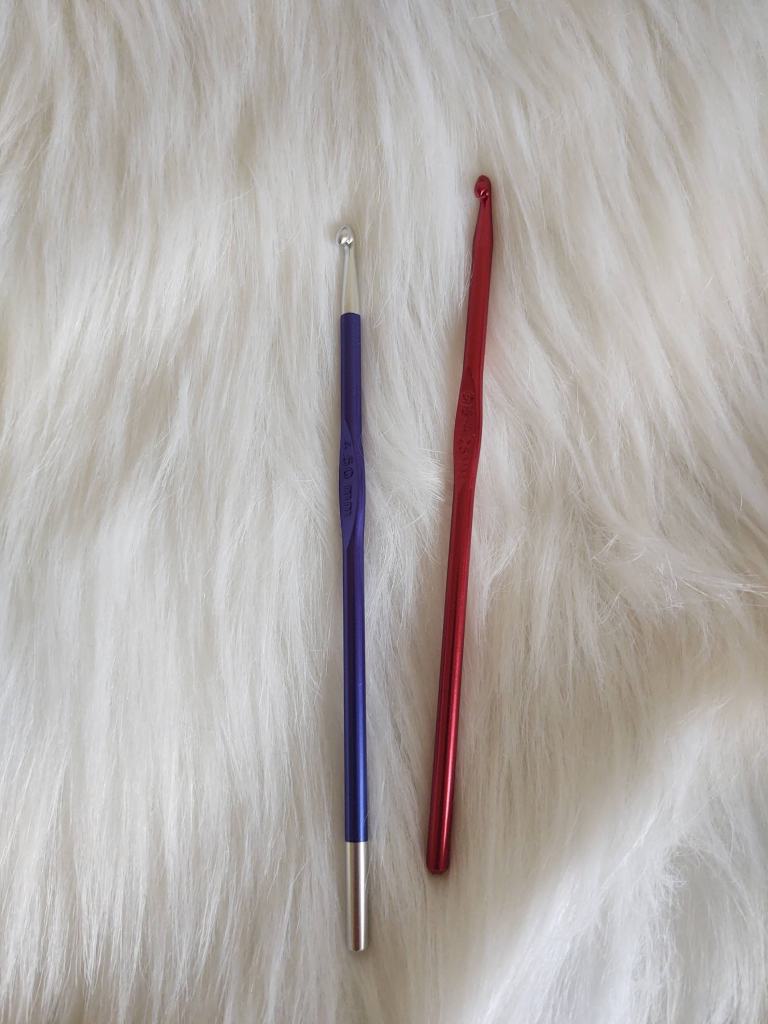
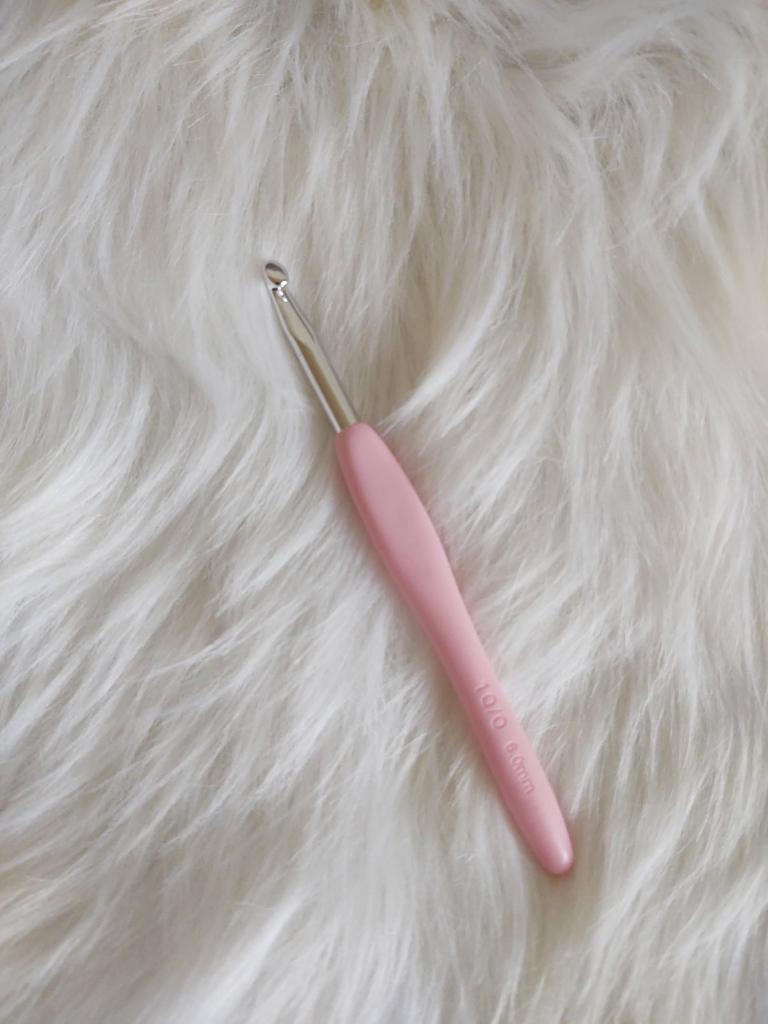
One can use the regular crochet hook for Tunisian crochet provided the stitches required for the project are more than 20 and if they are not ergonomic hooks. As the stitches need to be placed on the hook an even hook with minimal or no thumb rest will work the best. There are plain crochet hooks available in different lengths without the thumb rest and a stopper at the end. This stopper is to prevent the stitches from falling off the hook. Then there are Tunisian hooks with cables attached at the end to help one have 100+ stitches on it. The type of hook needed will be dictated by the number of stitches that one needs to hold on the hook.
Source: IYCSource: IYC
Source: IYCSource: IYC
What you will not be able to use are these:
Source: IYC
Does Tunisian crochet use up more yarn?
In the 1970’s when Tunisian crochet made an entrance in the US crochet scene, it was primarily used to create dense blankets made with a tight gauge that gave a square mesh on which one worked cross-stitch embroidery. Hence there was this claim that Tunisian crochet used more yarn. But Modern Tunisian crochet, later than 2000, has incorporated many stitches and designers have successfully created Tunisian crochet projects that are not bulky.
Can a beginner learn Tunisian crochet?
Absolutely! Its simple enough to teach and easy to pick it up. As always one needs to be patient and just give it a try😊
Are there any books on Tunisian Crochet?
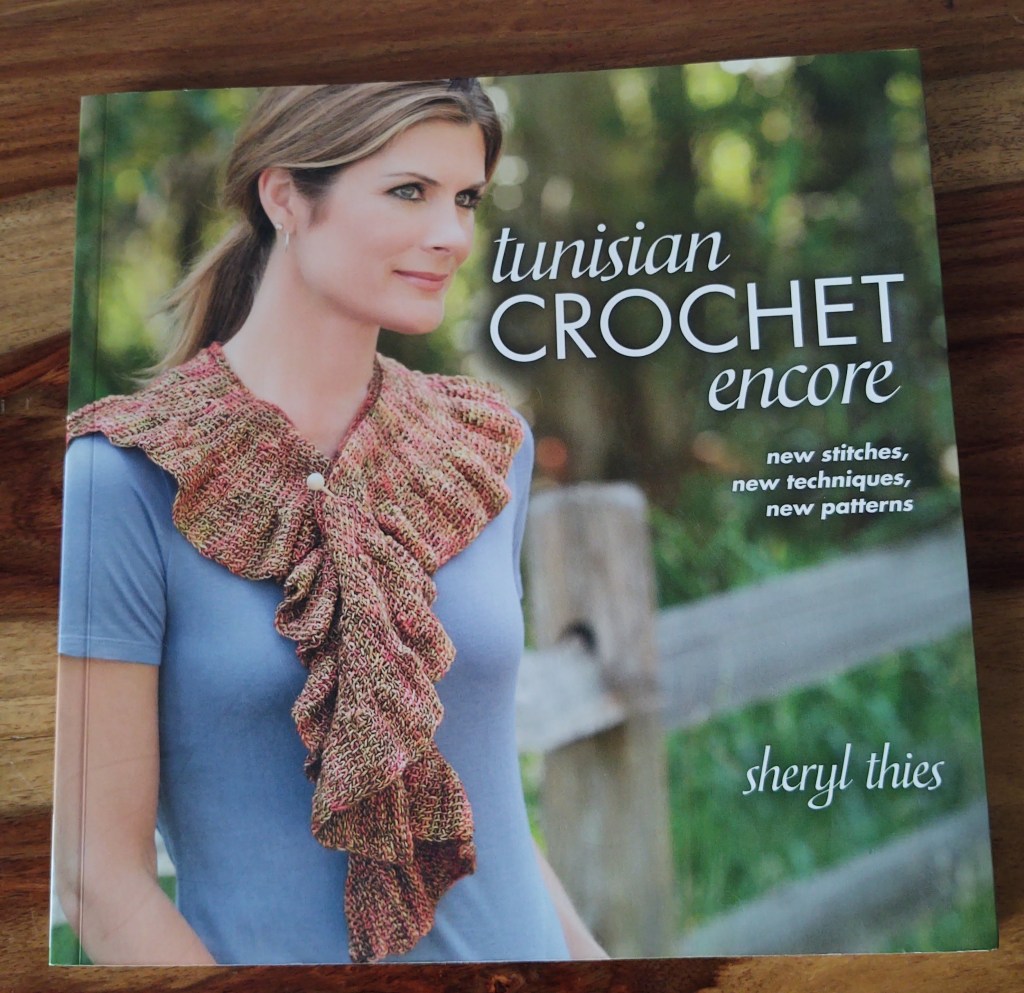
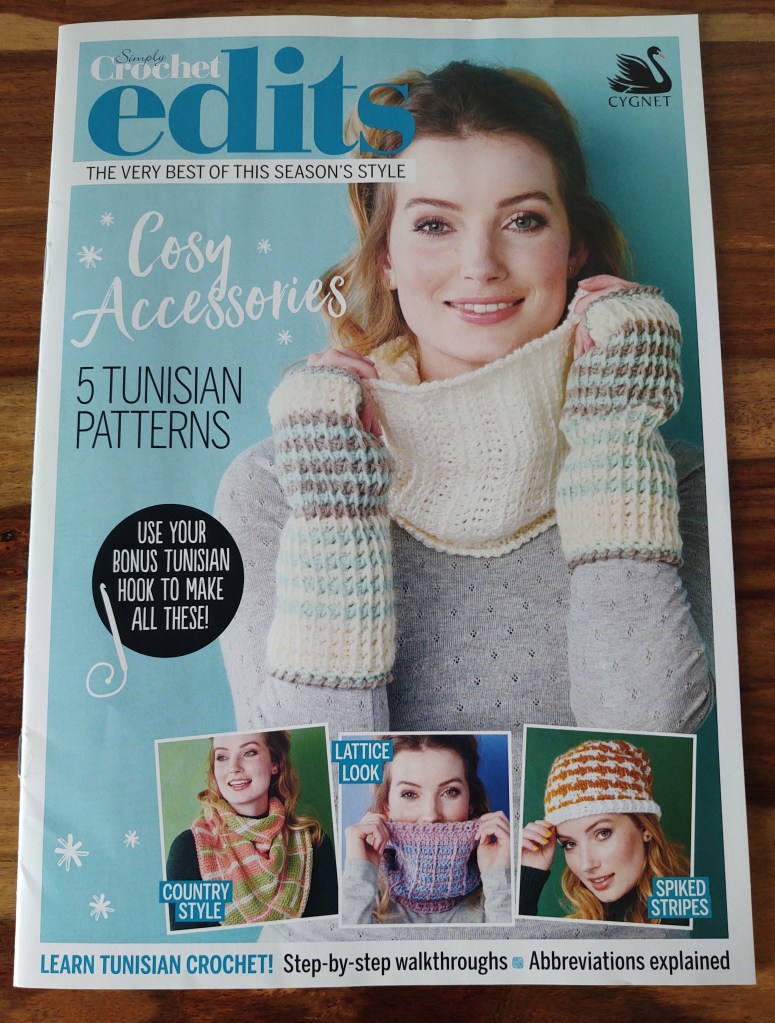
There are plenty of Tunisian crochet books available and a plenty of designers who have patterns for beginners.
Can one do color work with Tunisian crochet?
Yes! One square on the chart will refer to one stitch but one row will need two parts to complete it and they are known by Forward pass and Return Pass.
Tunisian crochet is quite easy to learn and it will definitely open many more possibilities once this skill is learnt.
Types of stitches
The basic Tunisian stitch is called the Tunisian Simple Stitch and is worked as follows
TSS
Row 1
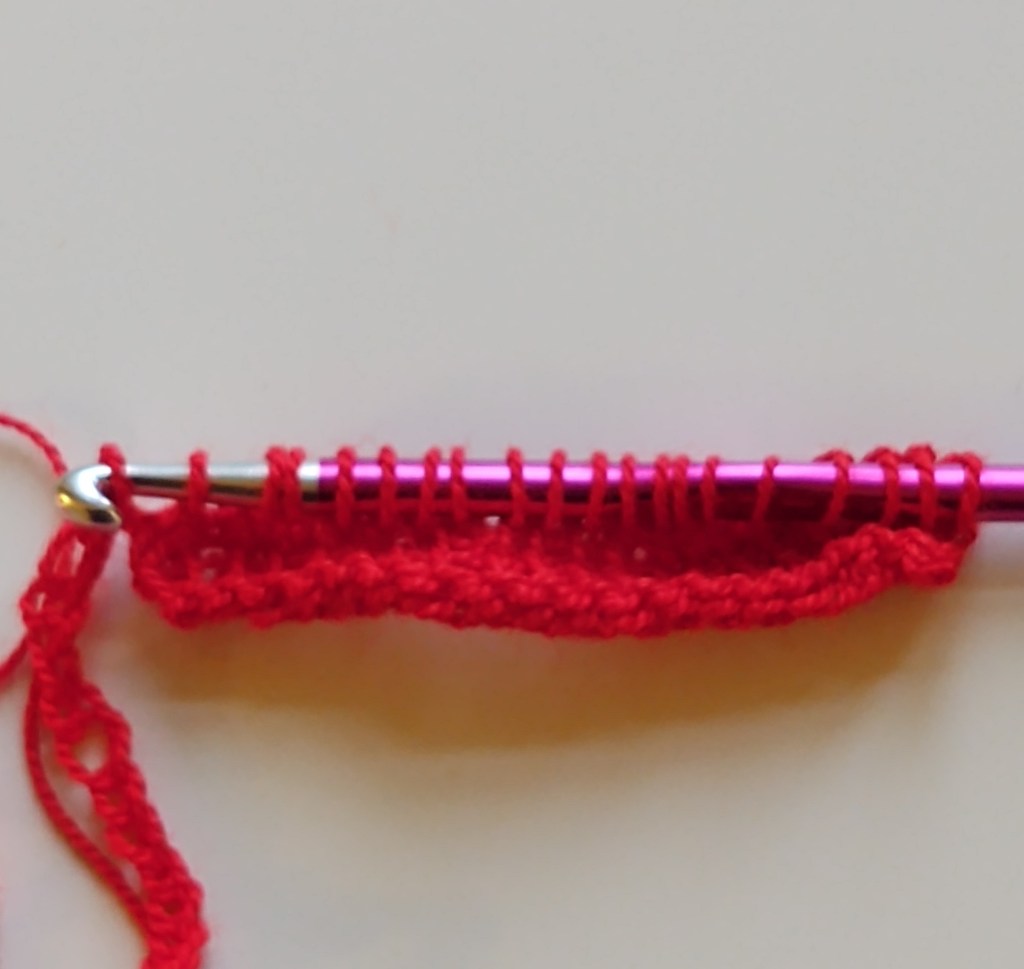
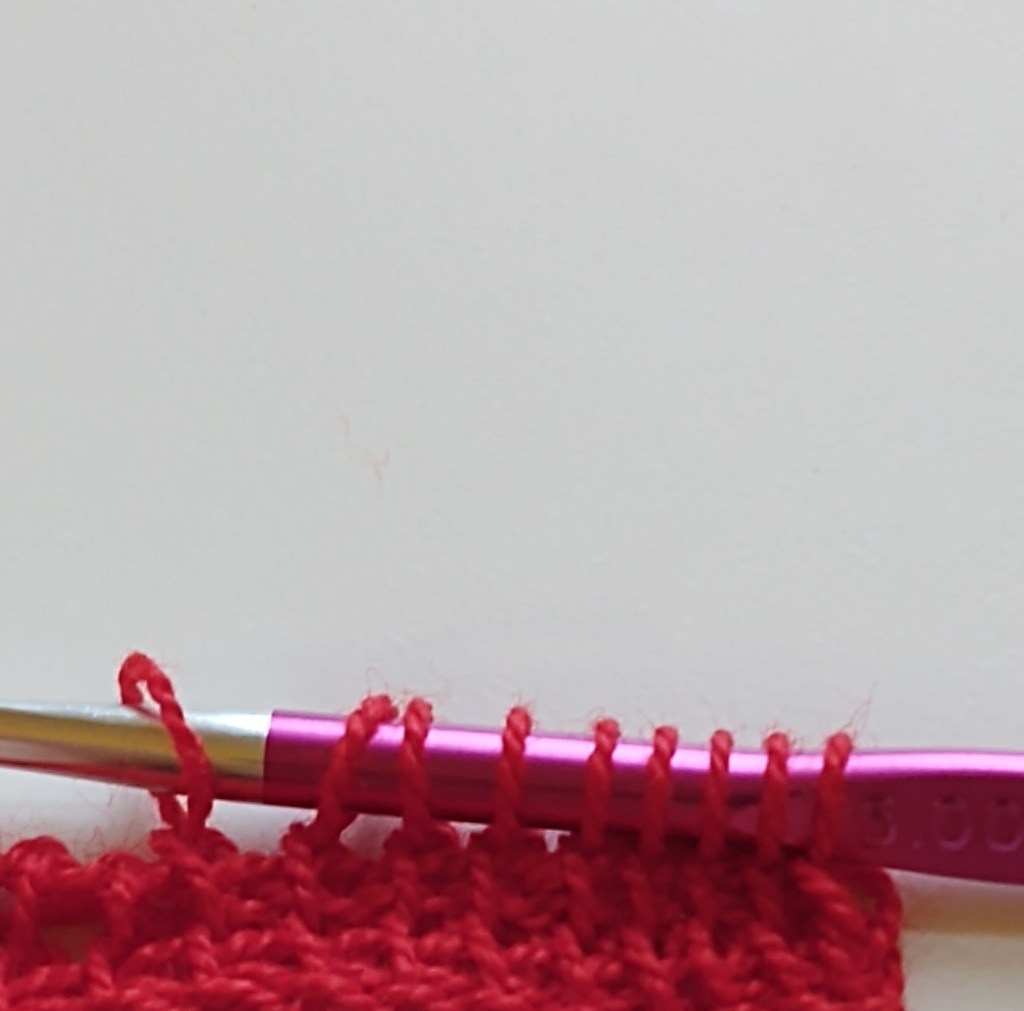
Forward pass: Chain any number of stitches, Insert hook in the second chain from the hook into the back bump of the chain(This will give a neat edge when you are done), yarn over and pull up a loop, (insert hook into the back bump of the next chain, yarn over and pull up a loop) repeat ( ) till you reach the end of the chain. Do not turn. The number of loops on the hook must be equal to the number of chains made. The first loop on hook counts as one stitch always unless mentioned otherwise.
Return pass: Yarn over and pull through one loop on the hook, (yarn over and pull through 2 loops), repeat ( ) till you have just one loop on the hook! That’s it. The first row is done!
Row 2
Forward pass: Insert hook into the second vertical bar(right to left) , yarn over and pull up a loop, (insert hook into next vertical bar, yarn over and pull up loop) repeat ( ) till you reach the last stitch. For the last stitch insert the hook into the vertical bar and the loop behind it(this will give a firm edge) , yarn over and pull up a loop. Do not turn
Return Pass: worked same as row 1.
That’s it! Repeat row 2 to the height required.
Binding off or finishing off
Once the height is reached, finish off in the following manner
Insert hook into the second vertical bar, yarn over pull up a loop, yarn over pull through two loops, (insert hook into next vertical bar, yarn over , pull up a loop, yarn over pull through 2loops) repeat ( ) till the end of the row. Do not cut yarn.
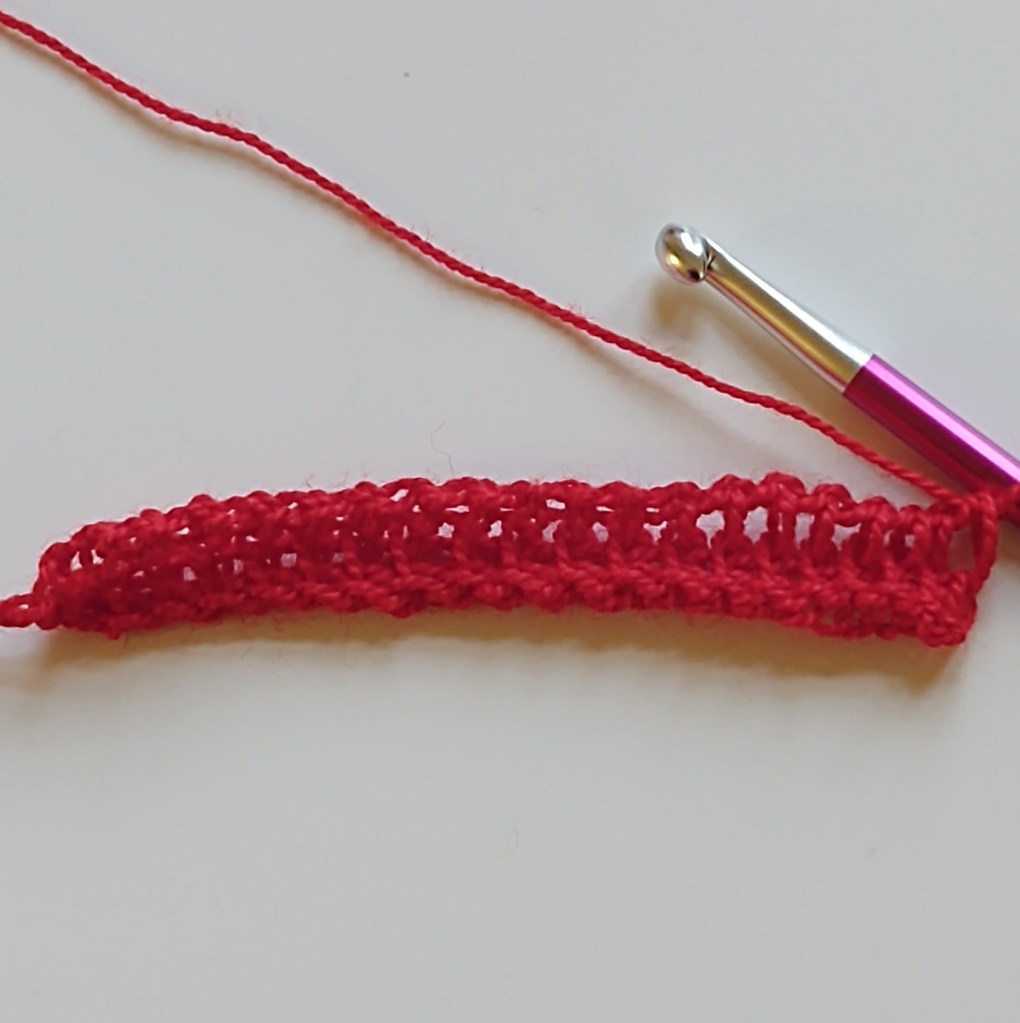
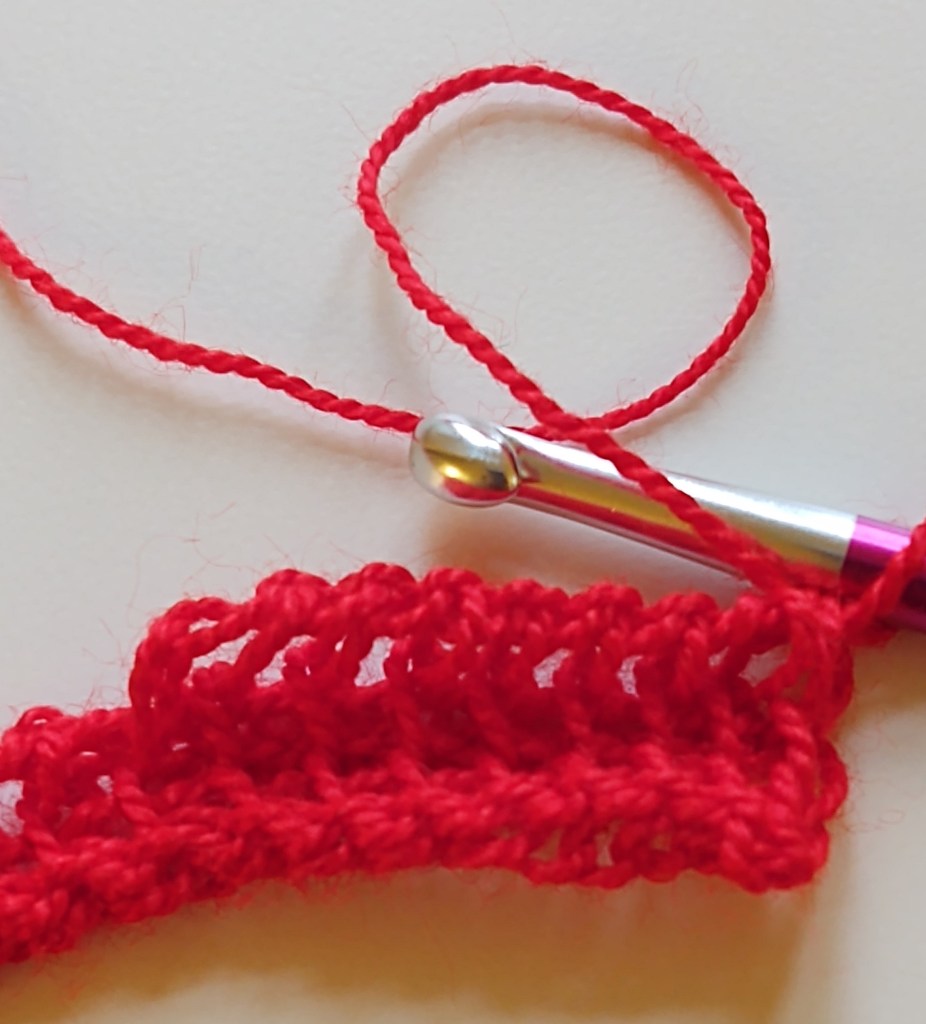
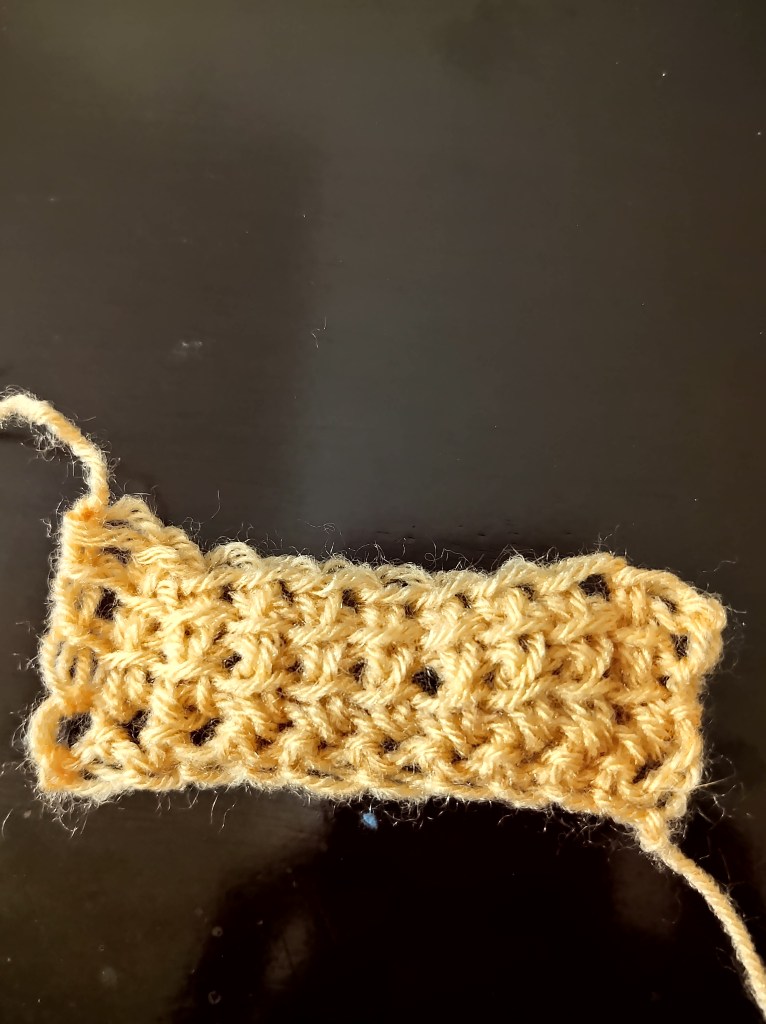
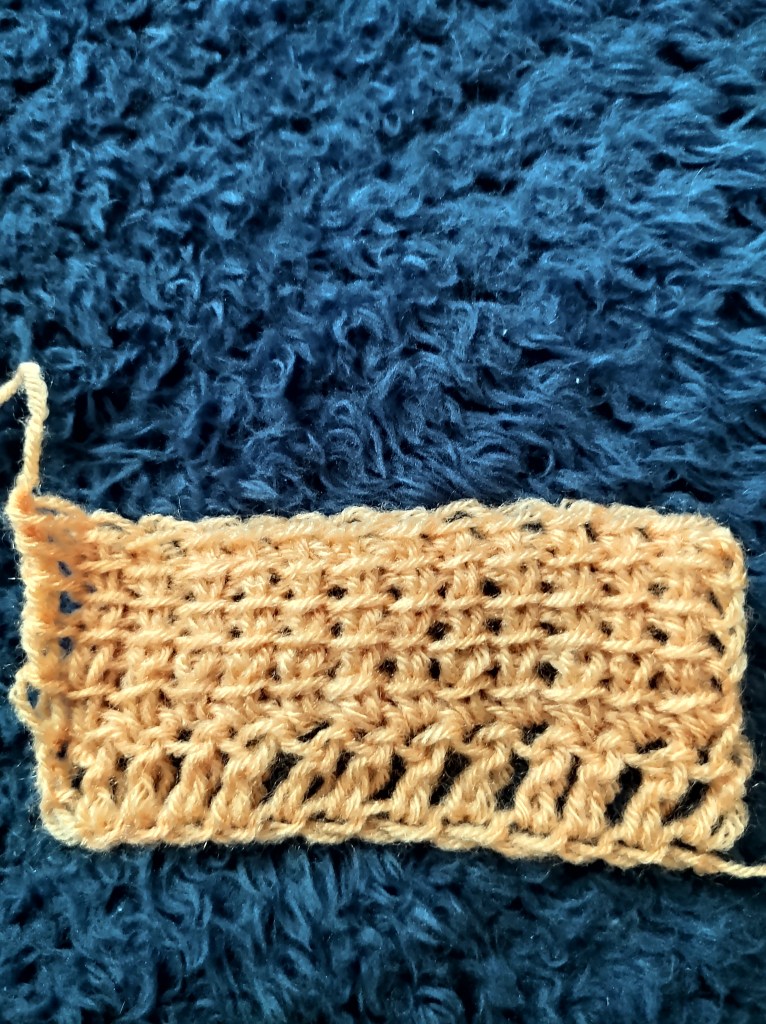
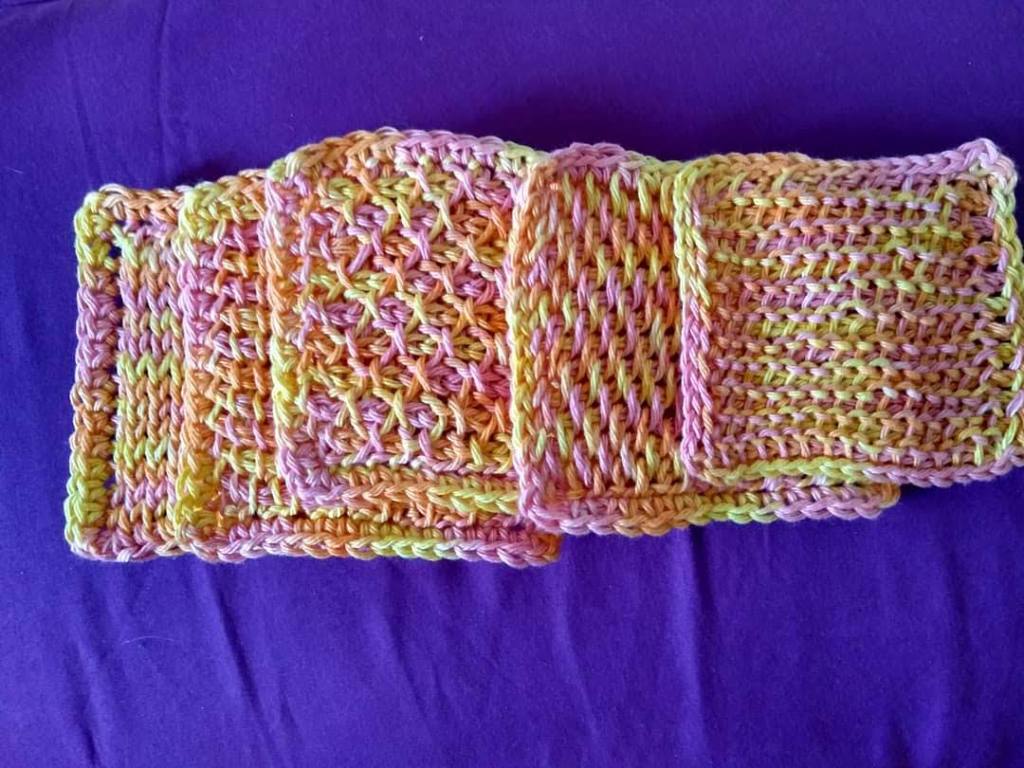
The Tunisian simple stitch tends to curl, and the piece needs a simple single crochet border around it to help it to lay flat. So, after the last stitch is bound off, chain 1, sc in the same place, sc along the left border of the work till you reach the base chain, 3 sc in the corner, 1 sc in each chain (the opposite side of starting chain) till you reach the right corner, 3 sc in the corner, 1 sc in each edge stitch up the right side border till you reach the top right corner, 3 sc in the corner, on sc in each stitch on top of bound of row, end with 2 sc in the corner where the first sc is. Fasten off and weave in ends. Enjoy your first Tunisian crochet sample.
Don’t forget to check back for the second stitch which can help to reduce the curl significantly😊
You can watch our video tutorial for the tunisian crochet basics for better understanding:
Hope this quick guide helps you to learn and pick up tunisian Crochet! Also feel free to leave any queries and comments below!
All images are copyright of IndiaYarnCircle and the respective makers, unless otherwise mentioned. You can read our disclaimer policy here.







 India Yarn Circle